
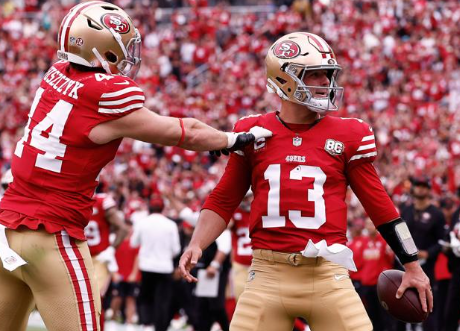
49ERS ROMP TO VICTORY
The Dolphins showed flashes of progress, but familiar failures in the pass rush, protection, special teams and second-half adjustments left them 0–2....
Two weeks into the season, the Miami Dolphins already face an uncomfortable truth: flashes of improvement are not translating into competitive football. A four-to-six-win campaign once looked attainable; after a 35–13 defeat to the San Francisco 49ers, even that modest projection feels optimistic. Miami showed signs of progress at Levi’s Stadium, but they were overwhelmed by recurring problems on both sides of the ball. Here are five takeaways from a defeat that left the Dolphins searching for answers.
1. No pressure, no chance
Miami’s pass rush was virtually non-existent. Brock Purdy had time to survey the field and repeatedly punish the secondary, completing 20 of 22 passes for 287 yards and two touchdowns without an interception. He was not sacked once. Jeff Hafley must find a way to manufacture pressure—through scheme, personnel changes or both—because no secondary can hold up indefinitely when the opposing quarterback is this comfortable. Until Miami disrupts the pocket, its defensive backs will continue to carry an impossible burden.
2. The offensive line remains Miami’s biggest liability
The offensive line remains a work in progress, but Austin Jackson’s struggles have become impossible to ignore. Miami may have few proven alternatives, which puts the onus on the coaching staff to provide more help through protection schemes and play design. Discipline is also a concern: penalties erased several promising gains, mistakes a rebuilding team cannot afford against an opponent as efficient as San Francisco. The run blocking offered more encouragement than the pass protection, although too many carries were still stopped before reaching the line of scrimmage.
3. Special teams are still surrendering field position
There was progress in the return game, with Jaylen Wright and Malik Washington each producing kick returns of more than 30 yards. Miami also prevented the explosive returns that hurt it against Las Vegas. Punting, however, remains an adventure. Bradley Pinion was again forced into a tackle—albeit on a play erased by penalty. Then there was the dropped ball while attempting the punt that handed San Francisco a short field. Two plays later, the error had become a touchdown. For a team with such a narrow margin for error, special-teams mistakes are proving especially costly.
4. The passing game lacks answers
Offensive coordinator Bobby Slowik clearly intended to lean on the running game, and the approach helped Miami control possession in the first half. That advantage meant little, though, because the Dolphins could not consistently finish drives in the end zone. The passing game remains a concern. Malik Willis has obvious arm talent, but poor protection and a receiving corps that struggled to separate limited his options. San Francisco concentrated on Caleb Douglas and challenged the other receivers to win their matchups; they rarely did. Willis compounded those issues by holding the ball too long on several snaps instead of throwing it away. The 49ers recorded four sacks, and his mobility prevented the total from climbing higher.
5. Miami lost the halftime adjustment battle
The first half provided some encouragement. Miami moved the ball, controlled possession and put themselves within striking distance several times. After halftime, the contest unravelled. Kyle Shanahan adjusted, isolated the Dolphins’ weaknesses and attacked them. Miami produced no effective counter. San Francisco took control on both sides of the ball and was able to take out several starters before the end, having effectively settled the game midway through the fourth quarter.
There were individual signs of promise, but they were overshadowed by weaknesses that continue to dictate results. Until Miami can pressure opposing quarterbacks, protect its own, eliminate costly special-teams errors and respond more effectively after halftime, progress will remain difficult to measure—and victories even harder to find.