
STILL A WORK IN PROGRESS
A lead lost after half time...
Miami gave themselves a genuine opportunity to win, then watched it disappear in a decisive second-half swing. The Dolphins led 13–3 at the interval, but New England scored 21 unanswered points to seize control. A late 35-yard touchdown reception by Kevin Coleman Jr. narrowed the deficit, yet a failed two-point conversion and an unsuccessful onside kick left Miami short. The Patriots came with a plan to slow down the Miami ground game, and for the most part it worked. They also kept Malik Willis in the pocket and punished him when he didn’t get rid of the ball quick enough, coming away with five sacks.
1. Explosive touchdowns undid the defensive work
Having held New England to three first-half points, Miami conceded touchdown passes of 43 yards to Kyle Williams and 48 yards to DeMario Douglas after the break. Those two plays supplied 91 yards and turned promising defensive stretches into scoring possessions. The contrast was decisive: Miami made New England work early, but could not prevent the long gains that transformed the game. As we have seen this season, the Dolphins aren’t a very good 3rd quarter team, through seven games they have now been outscored 62-23, the opposition adjusts they don’t, and it takes them time to catch up, this is down to the coaches, they need to get better.
2. The offense went quiet when the game turned
Miami’s 70-yard touchdown drive just before half-time suggested the attack had found a rhythm. Instead, the Dolphins didn’t score any third-quarter points while New England posted 14, turning a ten-point lead into a four-point deficit. Miami did not score again until 2:04 remained in the fourth quarter. The problem was not merely the final points total: the offense provided no scoring response during the stretch in which the Patriots took charge. Miami had two full possessions in the third quarter, both were derailed by penalty, the first was Patrick Paul being ineligible down field, the second, Ollie Gordon getting flagged for unsportsmanlike conduct. That flag was the biggest back breaker because it stopped what looked like a nice drive dead in its tracks and it was totally unnecessary.
3. A costly interception accelerated the collapse
With Miami trailing 17–13 early in the fourth quarter, Kevin Byard intercepted a tipped Malik Willis pass. Two plays later, Douglas scored from 48 yards, extending New England’s lead to 24–13. Both teams finished with one turnover, so it wasn’t as though they made it hard for themselves in that regard. It was the timing and immediate punishment of Miami’s giveaway that mattered: a one-score contest became an eleven-point chase. At this point in the team’s development they aren’t equipped or experienced enough to come back from much of a deficit, it will come, but not at the moment.
4. The defense could not get off the field on key downs
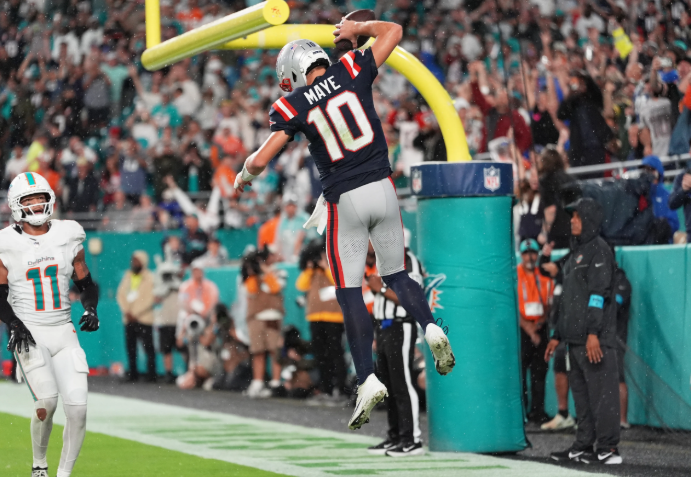
New England’s go-ahead touchdown came at the end of a 13-play, 73-yard possession lasting 7:36, finished by Drake Maye’s two-yard run. The Patriots converted both of their fourth-down attempts and held the ball for 31:57 overall. Miami still had a slim chance after its late touchdown, but Rhamondre Stevenson’s third-and-five conversion on the final possession allowed New England to run out the clock. The Dolphins needed a stop at those pressure points and did not get them. Generally, the defense has played better than expected but at the moment they aren’t able to control the game, tackles for loss have dried up and there have been very few momentum changing plays on that side of the ball.
5. A missed field goal left the comeback too late
Trailing 24–13, Miami used nearly six minutes on a 45-yard drive but came away empty when Zane Gonzalez missed a 43-yard field goal. That left the Dolphins still needing two scores, with substantially less time available. Coleman’s late touchdown restored hope, but the failed two-point attempt kept the deficit at five and New England recovered the onside kick. The missed kick did not explain the defeat on its own; it compounded an already difficult combination of lost time and unanswered Patriots points.
Final verdict
This was a failure to protect an advantageous position, rather than a game in which Miami were comprehensively outplayed throughout. The Dolphins built a deserved half-time lead, but explosive defensive concessions, an extended scoring drought and a badly timed turnover changed the outcome. A late rally made the score close; it could not undo the damage of New England’s 21-point unanswered run.