
NOT QUITE THE BEAT DOWN EXPECTED
Not good, but not that bad either..
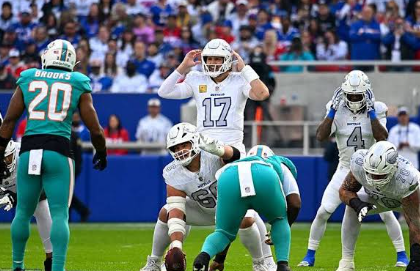
Miami’s trip to Buffalo exposed an offense struggling to make even routine plays consistently. Kyle McCord endured a difficult afternoon, the blocking offered little stability, and dropped passes compounded the problems. The defense provided resistance despite injuries up front, but Miami could not turn that effort into a competitive finish. Here are our takeaways from the defeat.
1. Kyle McCord has a rough day
McCord finished 12-of-33 for 102 yards, with no touchdowns, one interception and a 32.6 passer rating. Those numbers describe an ineffective passing attack, although they do not make this a quarterback-only failure. He was inaccurate a number of times, throwing the ball high or long, but mixed up in that was the fact he was playing behind unreliable pass protection and dropped passes. McCord struggled, but the players around him also failed to give the offense a dependable foundation.
The jury is still out on McCord but this game did him no favours, he took a step back from last week, but then he was facing a better team, it showed that he has a way to go, it was however only his second start.
2. The offensive line struggles in both phases
Miami’s protection problems were particularly evident on the right side. Austin Jackson had difficulty against Gregory Rousseau, while Jonah Savaiinaea and Aaron Brewer also struggled. The instability compounded McCord’s own problems and left the passing game without a reasonable chance to operate successfully.
The rushing figures need some context. PFF recorded 100 rushing yards on 20 attempts, but just 0.8 yards before contact per attempt, compared with 4.1 after contact. The overall production therefore should not disguise how little initial space the blocking created. Miami generated some gains on the ground without consistently opening clean running lanes, considering they are one of the biggest offensive lines in the league it is perplexing why they struggle to create running lanes.
The offense is really not good at the moment, yes there is the odd highlight and enough of a running game to keep opposing defenses honest, but until the line is sorted the offense will never amount too much. There was optimism at the start of the season that they had finally assembled a respectable line but sadly that isn’t the case, the right side being the biggest liability, this has to be addressed in the off-season.
3. Too many drops by Dolphins wide receivers
Miami could not afford to waste the passes that were actually on target, yet Douglas and Bell repeatedly did so. Douglas was credited with four drops, while Bell failed to secure a well-thrown deep ball. Malik Washington made a great one-handed fourth-down catch late in the game, but the wider receiving effort did not provide enough help for McCord, who struggled all game long.
PFF listed 47 yards lost on Miami drops. In a passing game that produced only 102 gross yards, those missed catches were a big part as to why there were limited scoring opportunities. To be a productive offense you need to be able catch the ball on a consistent basis when it comes your way, this week it didn’t happen.
The draft card on Douglas was a receiver who has enticing moments, showcasing his catch radius/ball skills on fades and deep throws, but focus drops and an inability to win contested catches at a high enough rate can’t be overlooked, guessing that rings true at the moment. As for Bell, it is good that he is getting reps this year, but he is clearly struggling so we should lower expectations.
4. An injury-hit defense offers a positive
Considering Miami were missing its top three defensive tackles, they nevertheless made Buffalo work on the ground and intercepted Josh Allen twice. Chop Robinson stood out against the run and supplied the pressure that helped produce Jacob Rodriguez’s interception. Zayne Anderson also contributed an interception and a sack. Given the absences up front, it was a surprise they played so well to be fair.
This was not a shutdown performance: Buffalo still moved the ball through the air, and a coverage breakdown helped D.J. Moore score. Even so, the defense did more to keep Miami involved than the offense did. The future looks bright for the defense, the majority are young and should only get better the more they play. Looking ahead they need pass rush and cornerback help along with better depth.
5. Miami wastes its red-zone chance
Miami only had one red-zone possession, and it ended with a field goal rather than a touchdown. The clearest missed opportunity came early in the third quarter, when Douglas dropped a third-and-goal pass, forcing Miami to settle for its third field goal of the afternoon.
Daniel Carlson converted all three of his field-goal attempts, but Miami never reached the end zone. Against Buffalo, the Dolphins needed more than occasional scoring drives ending in three points, you can’t beat Buffalo by scoring three points rather than seven. Their biggest problem was creating too few chances; if Douglas had kept hold of the ball chances are he would have made it into the endzone, that may have changed the complexion of the game, we will never know.