
PROBLEM 101
Miami's route to an upset...
Miami enter at 1–6 against a 5–2 Detroit side riding a three-game winning streak. The challenge is considerable: the Lions average 29 points and 395.4 yards per game, compared with the Dolphins’ 16.7 points and 290 yards. From Miami’s viewpoint, this cannot simply become a contest of trading scores. The route to an upset is to sustain possessions, exploit Detroit’s defensive absences and disrupt Jared Goff without leaving the secondary exposed. These five match-ups are going to be key for a win.
1. Miami’s offensive line v Detroit’s pass rush
Detroit have 24 sacks entering the game, 3rd best in the league, so protecting Malik Willis is the first condition for it to be a competitive afternoon. Tackles Patrick Paul and Austin Jackson, alongside Miami’s interior line, must give him room to deliver on schedule rather than force repeated escapes. DJ Wonnum is ruled out, but Miami should not mistake that absence for an easy assignment. The tactical answer is a mixture of quick throws, screens and selective extra protection, with deeper shots reserved for favourable situations. Miami’s key: avoid the sacks and holding penalties that turn manageable drives into third-and-long. Willis’ mobility should complement the passing game, and be used when necessary.
2. Ollie Gordon II and Greg Dulcich v Detroit’s linebackers
Gordon leads Miami with 408 rushing yards and four rushing touchdowns, giving the Dolphins a foundation for keeping their offense balanced. With Jack Campbell ruled out, Miami should test Detroit’s replacement combinations through the middle: establish the run, then use play-action to create throwing windows for Dulcich behind the linebackers. That is a tactical opportunity, not a guarantee that Detroit will struggle. Jaylen Wright and Kaytron Allen are both questionable, making the backfield’s available depth worth monitoring. Miami’s key: make the linebackers respect both the hand-off and the short passing game. Positive early-down gains would reduce the number of obvious passing situations Willis faces.
3. Malik Washington and Miami’s receivers v Detroit’s depleted secondary
Washington leads Miami with 31 catches for 329 yards. With cornerback D.J. Reed and safety Kerby Joseph ruled out, the Dolphins should use motion and varied alignments to test Detroit’s coverage communication. Washington can provide an underneath outlet while Caleb Douglas and Chris Bell stretch the available space outside. The temptation will be to chase explosive plays; the better approach is to identify the favourable coverage first and let Willis take what is available. Miami’s key: turn short completions into first downs and choose the right moments to attack downfield. Detroit’s absences create openings to potentially exploit.
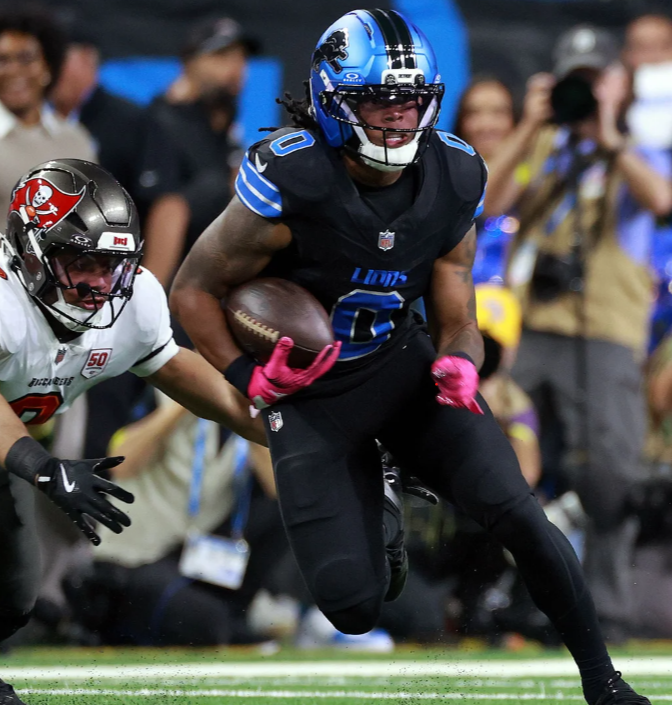
4. Miami’s defensive front and linebackers v Jahmyr Gibbs
Gibbs arrives with 773 rushing yards, eight rushing touchdowns and a 4.9-yard average. Miami need their defensive tackles to hold their positions and linebackers Jordyn Brooks and Jacob Rodriguez to close running lanes without overcommitting. Detroit centre Cade Mays is ruled out, giving Miami a reason to test the Lions’ revised interior blocking. However, attacking recklessly could open the very gaps Gibbs needs. Miami’s key: disciplined run fits, controlled pursuit and secure tackling. Making Detroit earn its rushing yardage in smaller chunks would help create longer third downs and prevent the Lions from dictating the game through an uninterrupted run–play-action rhythm.
5. Miami’s pass rush and coverage v Jared Goff’s timing game
Goff has thrown 15 touchdowns against just one interception, while Miami have only nine sacks as a team. The Dolphins therefore cannot build their plan around expecting unforced mistakes. Chop Robinson and Zach Sieler need to generate pressure, supported by defensive looks that make Goff reassess his first read. Amon-Ra St. Brown, Detroit’s leading receiver with 571 yards, is questionable; Miami must prepare for him to play rather than assume his absence. Miami’s key: disrupt the timing of the first option while keeping coverage sound behind the rush. Selective pressure is preferable to repeatedly blitzing and leaving easy answers in the space vacated.
The Dolphins’ winning formula
Miami’s best chance is a balanced offensive performance, fewer negative plays and a defense that makes Detroit sustain drives rather than collect easy explosives. The Lions’ defensive absences offer genuine opportunities, but the Dolphins must convert those opportunities into touchdowns. The Dolphins defense must play their best on 3rd down because Dan Campbell is very aggressive on 4th down and rolls the dice more than any other team, they can’t afford to be on the field for any longer than they need to be, especially with Gibbs pounding the rock. Bottom line: protect Willis, establish Gordon and keep Gibbs under control. If Miami lose those three battles, the upset becomes a much steeper proposition.