
IS A SECOND WIN ON THE CARDS?
Five keys to a Miami win...
A new quarterback, signs of defensive progress and an opponent in the middle of a roster overhaul: Miami’s trip to Indianapolis offers up the chance of a second victory. The Dolphins arrive at 1–7 following a 19–9 defeat by Detroit, while the 2–7 Colts have lost five straight. Neither side has earned the luxury of taking the other lightly. For Miami, the key is not about asking Kyle McCord to rescue the season in one afternoon. It is about supporting his first NFL start with disciplined defense and an offense that finally turns opportunities into touchdowns. Here are five keys to making that happen.
1. Who is Kyle McCord?
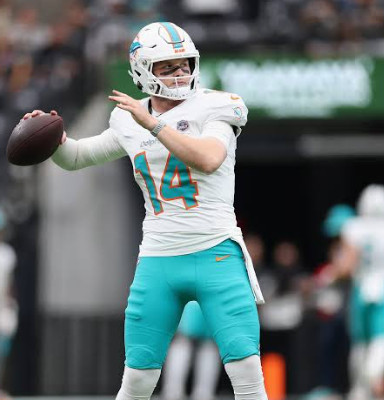
McCord is the former Ohio State and Syracuse quarterback drafted by Philadelphia in the sixth round in 2025. He led the FBS with 4,779 passing yards at Syracuse in 2024 and joined Miami in an August trade from Green Bay, replacing Quinn Ewers as the back-up quarterback. Now, with Malik Willis on injured reserve, he is preparing for his first NFL regular-season start without having attempted a regular-season pass. His 2026 preseason with the Packers offered encouragement: 446 yards, four touchdowns and no interceptions. That is a promising introduction, not proof that he is ready to carry an offense. Slowick needs to give him clear early reads, quick completions and a credible running game before asking for more ambitious throws. The key is controlled aggression: take the opportunities Indianapolis offers without turning an unfamiliar situation into a turnover-filled afternoon.
2. Defensive improvements are starting to show
The Detroit result was another defeat, but holding the Lions to 19 points and just one touchdown gave Miami something to build on. The Dolphins recorded three sacks and limited Jahmyr Gibbs to 74 rushing yards on 20 carries. Those are tangible signs that Jeff Hafley’s defense can keep a game competitive even when the offence struggles. One encouraging performance does not establish consistency, however, and the loss of Zach Sieler to injured reserve makes sustaining that progress harder. Against Indianapolis, Miami needs pressure that does not depend on reckless blitzing, secure tackling and fewer easy first-down gains. Making the Colts earn long drives would protect McCord from having to chase the game. The next step is not simply looking better; it is producing another performance that gives the offense a realistic winning target.
3. Make the Colts’ depleted receivers prove themselves
Indianapolis traded Keenan Allen and Josh Downs this week, leaving a reshuffled receiving group with Laquon Treadwell, Ashton Dulin, Anthony Gould, Deion Burks and Nick Westbrook-Ikhine among the available options. On paper, that should let Miami devote more attention to the run rather than build its entire plan around containing established wideouts. But “no threat” would be an overstatement: Dulin scored on a 55-yard reception against Dallas last week. Miami cannot allow a thin receiving room to become an excuse for loose coverage or missed tackles. Challenge the receivers, contest the short throws and make Daniel Jones repeatedly find answers. Tight end Tyler Warren also needs attention underneath. The opportunity is to make Indianapolis win through a passing game disrupted by personnel changes—not to assume it cannot.
4. Stop Jonathan Taylor from controlling the game
Taylor remains the obvious focal point after Indianapolis’ receiver departures. He enters with 656 rushing yards and eight rushing touchdowns, plus 26 receptions for 220 yards. Stopping him therefore means more than crowding the line of scrimmage: Miami must also account for checkdowns and maintain its tackling beyond the first wave. The Dolphins are allowing 111.8 rushing yards per game, and Sieler’s absence puts extra responsibility on the remaining interior defenders. Jacob Rodriguez and Jordyn Brooks need clean routes to the ball, not to get caught up with blockers several yards downfield. Winning early downs would create obvious passing situations and reduce Indianapolis’ play-action options. The objective is to make Taylor work for modest gains rather than let him dictate possession, field position and the pace of the afternoon.
5. Can Miami’s low-scoring offence exploit the Colts’ defense?
This is the matchup Miami has to turn into points. The Dolphins average just 15.8 points per game, while Indianapolis allows 27.7. The Colts also concede 137 rushing yards per game and have traded defensive tackle DeForest Buckner. That suggests an opening for Ollie Gordon II and a balanced approach that keeps McCord out of repeated third-and-long situations. Miami cannot assume those weaknesses will solve its own problems, especially with centre Aaron Brewer ruled out. Protection, communication and avoiding penalties remain essential. Above all, the Dolphins need to finish drives: they went 0-for-3 in the red zone against Detroit and settled for three field goals. A favourable defensive matchup matters only if Miami converts possession into touchdowns rather than another afternoon of missed opportunities.
The bottom line: Miami’s best chance is a balanced team performance, not a spectacular debut demanded of McCord. Sustain the defensive improvement, prevent Taylor from taking over, make the new-look Colts passing game earn its yards and attack a vulnerable defense without gifting it turnovers. The opportunity is there. The Dolphins still have to turn it into a complete game.